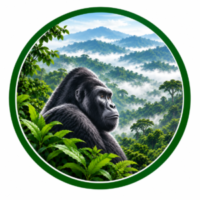
Gorilla Trekking Uganda vs Rwanda: Which Destination Is Right for You?
Gorilla trekking in Uganda and Rwanda offers one of the rarest wildlife experiences in Africa: the opportunity to walk through a high altitude rainforest and spend time observing endangered mountain gorillas in their natural habitat. Both countries are part of the Greater Virunga conservation landscape and share a long history of mountain gorilla conservation, but the trekking experience in each destination has its own character.
For many travelers planning a gorilla safari, one of the first questions is whether to choose Uganda or Rwanda for gorilla trekking. The answer depends on several factors, including the cost of the gorilla permit, where the gorillas are found, accessibility, accommodation, trekking conditions, the length of the safari and whether you want to combine gorilla trekking with a wider wildlife adventure.
Uganda offers gorilla trekking in Bwindi Impenetrable National Park and Mgahinga Gorilla National Park, while Rwanda’s gorilla trekking takes place in Volcanoes National Park. Bwindi is particularly important because it is home to roughly half of the world’s mountain gorillas, while Rwanda’s Volcanoes National Park protects part of the Virunga mountain range where mountain gorillas live across international borders. Uganda Wildlife Authority currently describes Bwindi as the country’s most popular gorilla trekking destination and says Uganda is home to more than half of the world’s mountain gorilla population.
Although both destinations provide the chance to see mountain gorillas, the journey to reach them, the surrounding landscapes and the overall safari experience can be quite different. Understanding these differences will help you plan a trip that matches your interests, budget and available time.
Gorilla Trekking in Uganda
Uganda’s gorilla trekking experience is centered mainly around Bwindi Impenetrable National Park, with additional trekking available in Mgahinga Gorilla National Park. Bwindi is a vast ancient rainforest in southwestern Uganda and is divided into four main tourism sectors: Buhoma, Ruhija, Rushaga and Nkuringo.
Each sector has its own character. Buhoma is in the northern part of the forest and has a long history of gorilla tourism. Ruhija is found in eastern Bwindi and is also known for its forest scenery and birdlife. Rushaga and Nkuringo are in the southern part of the park and are particularly attractive to travelers exploring the southern side of Bwindi.
This gives Uganda a considerable variety of gorilla trekking settings within one national park. Your experience can therefore depend not only on choosing Uganda but also on the particular Bwindi sector where your gorilla permit is booked.
Mgahinga Gorilla National Park provides a different setting. It lies in the Virunga Mountains and is smaller than Bwindi, with dramatic volcanic scenery surrounding the forest. Uganda Wildlife Authority describes Mgahinga as an alternative to Bwindi’s denser jungle and currently indicates that the park issues a limited number of gorilla permits each day.
Gorilla Trekking in Rwanda
In Rwanda, mountain gorilla trekking takes place in Volcanoes National Park, in the country’s northwest. The park forms part of the Virunga Massif, a chain of volcanic mountains extending across Rwanda, Uganda and the Democratic Republic of Congo.
The landscape is quite different from much of Bwindi. Volcanoes National Park is characterized by steep volcanic slopes, bamboo and montane forests, open areas and dramatic views of mountains such as Karisimbi, Bisoke, Sabinyo, Gahinga and Muhabura. Mount Karisimbi rises to 4,507 metres, giving the region its distinctive high altitude setting.
Rwanda has developed a highly organized gorilla tourism system around Volcanoes National Park. Visitors report to the park headquarters at Kinigi for briefing and allocation before beginning their trek. According to Visit Rwanda, hikes to gorilla groups can take from around 30 minutes to more than four hours depending on the location of the assigned family and the terrain.
This is important because it is not accurate to say that every gorilla trek in Rwanda is short or easy. Volcanoes National Park has steep mountainous terrain and reaches high elevations. The actual difficulty depends on the location of the gorilla family on the day of trekking.
Uganda vs Rwanda Gorilla Permit Cost
One of the biggest differences between Uganda and Rwanda is the price of a standard gorilla trekking permit.
Under Uganda Wildlife Authority’s 2024 to June 2026 conservation tariff, a gorilla trekking permit for a foreign non resident was US$800 per person, while the rate for foreign residents was US$700 and the rate for citizens of the East African Community was UGX 300,000. The tariff states that the permit includes the guide fee, park entrance fees for the day and a community development contribution.
Rwanda’s standard gorilla trekking permit is currently US$1,500 per person per day for international visitors. Visit Rwanda states that the minimum age for gorilla trekking is 15 and that eight tracking permits are issued per gorilla troop per day.
This creates a significant difference in the basic permit cost. Travelers comparing the two destinations should remember, however, that the permit is only one part of the total safari budget. Accommodation, transportation, meals, flights, porter services and additional activities can have a major effect on the final cost of a trip.
It is also important to check the current tariff before booking because conservation fees and tourism regulations can change.
What About the Gorilla Habituation Experience in Uganda?
Uganda has another option that makes it particularly interesting for travelers who want a longer gorilla encounter.
In Bwindi, Uganda offers the Gorilla Habituation Experience, which is different from ordinary gorilla trekking. Instead of visiting a fully habituated family for the standard viewing period, participants accompany researchers, trackers and guides while spending extended time with a designated semi habituated gorilla family.
Under Uganda Wildlife Authority’s 2024 to June 2026 tariff, the foreign non resident Gorilla Habituation Experience permit costs US$1,500 per person, compared with US$800 for standard gorilla tracking.
The habituation experience can provide up to four hours of observation with the gorillas, subject to the rules and conditions of the activity. This makes it particularly attractive to wildlife photographers, researchers, conservation enthusiasts and travelers who want more time to observe gorilla behaviour.
Therefore, when comparing Uganda and Rwanda, it is useful to distinguish between standard gorilla trekking and the Gorilla Habituation Experience. Uganda provides both options, while a normal gorilla trek in Rwanda involves the standard one hour encounter with a habituated gorilla family. Visit Rwanda confirms that gorilla groups in Volcanoes National Park have a strict maximum of one hour of tourist contact per day.
Uganda vs Rwanda: Which Trek Is More Difficult?
Trekking difficulty is one of the most commonly discussed differences between Uganda and Rwanda, but it is also one of the areas where travelers should avoid making assumptions.
Bwindi Impenetrable National Park is a mountainous rainforest with steep slopes, dense vegetation, narrow trails and muddy sections. Uganda Wildlife Authority states that gorilla trekking in Uganda can last approximately two to seven hours, including the time spent searching for the gorillas, and recommends moderate fitness.
Some treks may therefore be relatively short, while others can involve several hours of hiking before the gorilla family is located. The terrain can be demanding, particularly after rain.
Rwanda’s Volcanoes National Park also involves steep hiking. Visit Rwanda notes that treks can range from about 30 minutes to four or more hours depending on the location of the gorilla group, with hikes reaching elevations between approximately 2,500 and 4,000 metres.
For this reason, it is better to say that both Uganda and Rwanda can provide physically demanding gorilla treks. Bwindi’s dense forest and rugged hills create one type of challenge, while the steep volcanic terrain and high elevations of Volcanoes National Park create another.
Your fitness level, the particular gorilla family assigned to you, weather conditions and the location of the gorillas on the day can all influence how difficult the trek becomes.
Uganda vs Rwanda: Gorilla Families and the Trekking Experience
The gorilla experience is not simply about reaching a particular location. Much of the excitement comes from following trackers through the forest and eventually finding a gorilla family.
In Uganda, Bwindi’s gorilla families are spread across four major sectors. The gorillas move freely through the forest, meaning the exact location of a family changes from day to day.
This creates a genuine wilderness experience. You may spend time walking through thick vegetation, listening for signs of the gorillas and following information from the trackers before finally reaching the family.
Rwanda’s Volcanoes National Park also has a carefully managed system. Visit Rwanda currently lists 12 fully habituated gorilla families for tourism, with additional groups habituated for scientific research. Eight tourists are permitted to visit a gorilla troop per day, and each group has a maximum tourist contact period of one hour.
In both countries, the number of tourists around a particular family is controlled. The aim is to reduce disturbance to the gorillas while allowing tourism to contribute to conservation and surrounding communities.
Bwindi vs Volcanoes National Park
The landscapes of the two destinations are noticeably different.
Bwindi is famous for its ancient, dense rainforest. The name “Impenetrable” reflects the thick vegetation that can make some parts of the forest feel wild and secluded. The park covers about 321 square kilometres and ranges from approximately 1,160 to 2,607 metres above sea level. It was gazetted as a national park in 1991 and became a UNESCO World Heritage Site in 1994.
Volcanoes National Park, on the other hand, is dominated by the Virunga volcanic landscape. The combination of mountain slopes, bamboo forest, montane vegetation and volcanic peaks gives the Rwandan experience a different visual character.
Neither landscape is simply better than the other. They provide different experiences.
If you enjoy dense rainforest, steep forest trails and a feeling of being deep inside an ancient jungle, Bwindi provides that environment. If you are particularly interested in volcanic mountains and dramatic high altitude scenery, Volcanoes National Park offers a distinctive setting.
Accessibility: Uganda vs Rwanda
Accessibility is another important consideration when planning a gorilla safari.
Rwanda has an advantage for travelers who want a relatively straightforward connection between an international airport and the gorilla trekking region. Kigali International Airport is close to Kigali city, and Volcanoes National Park is reached by road from Kigali. Visit Rwanda describes gorilla trekking as relatively accessible and provides booking options through its tourism system.
Uganda generally involves more travel time when reaching Bwindi from Entebbe or Kampala by road. The journey can take many hours because of the distance and mountainous roads in southwestern Uganda.
However, Uganda can also be incorporated into a much wider safari. Travelers can combine gorilla trekking with Queen Elizabeth National Park, Kibale National Park, Lake Bunyonyi, Mgahinga Gorilla National Park, Lake Mburo National Park or Murchison Falls National Park, depending on the length of the trip.
Travelers arriving through Rwanda can also cross into Uganda and combine destinations in both countries. For some itineraries, flying into Kigali and traveling overland to Bwindi can be a practical option, particularly for travelers who want to reduce the long road journey from Entebbe.
Accommodation in Uganda and Rwanda
Both Uganda and Rwanda offer accommodation ranging from budget guesthouses to luxury lodges.
Around Bwindi, accommodation is spread across the different sectors. Travelers can choose from lodges near Buhoma, Ruhija, Rushaga and Nkuringo, depending on where their gorilla permit is booked.
This is an important point when planning a Uganda gorilla safari. You should generally choose accommodation based on the sector of your gorilla permit, rather than booking a lodge first and trying to organize the permit afterward.
Rwanda’s Volcanoes National Park also has a wide range of accommodation around Musanze and Kinigi, including luxury lodges, mid range properties and more affordable guesthouses.
Rwanda has developed a strong luxury tourism market around gorilla trekking, while Uganda offers a broader range of safari styles and budgets. Travelers can find comfortable accommodation in both countries, so the choice often comes down to the style of safari and the wider itinerary rather than gorilla trekking alone.
Gorilla Trekking and Conservation
Gorilla tourism plays an important role in the conservation of mountain gorillas in both Uganda and Rwanda.
Uganda Wildlife Authority explains that gorilla tourism contributes to conservation and community development around Bwindi and Mgahinga. Revenue sharing has supported projects in communities surrounding the parks.
Rwanda also directs tourism revenue toward conservation and communities. Visit Rwanda states that 10 percent of gorilla permit revenue is channelled toward local communities and describes initiatives supporting schools, health centres, roads and coexistence between communities and gorillas.
The conservation story is particularly significant because mountain gorillas remain a highly protected species. Uganda’s recent conservation reporting indicates that mountain gorilla numbers in Uganda remain stable, while the broader regional population has recovered significantly compared with historical levels.
The continued recovery of mountain gorilla populations is closely connected to long term conservation, veterinary care, scientific research, ranger protection, community involvement and responsible tourism.
Best Time for Gorilla Trekking in Uganda and Rwanda
Gorilla trekking is possible throughout the year in both Uganda and Rwanda.
Many travelers prefer the relatively drier periods, particularly June to September and December to February, because forest trails are generally easier to navigate when there is less rainfall.
However, neither destination should be considered completely dry during these months. Bwindi and the Virunga region are rainforest and mountain environments, and rainfall can occur at any time.
The wetter periods can make trails muddy and slippery, but they also bring lush vegetation and beautiful forest scenery. Some travelers deliberately choose these months because they prefer quieter travel conditions and do not mind dealing with rain.
For gorilla trekking, good preparation is more important than relying entirely on the season. Waterproof clothing, sturdy hiking boots, long trousers, gardening gloves and protection against rain are useful throughout the year.
Uganda vs Rwanda for a Longer Safari
The choice becomes more interesting if you are planning more than just a gorilla trek.
Uganda is particularly well suited to travelers who want to combine gorillas with a broader wildlife safari. A longer itinerary can include chimpanzee trekking in Kibale, a boat cruise on the Kazinga Channel, game drives in Queen Elizabeth National Park, a visit to Lake Bunyonyi, golden monkey trekking in Mgahinga or wildlife experiences in Lake Mburo and Murchison Falls.
Rwanda also offers a variety of experiences beyond gorilla trekking. Volcanoes National Park provides golden monkey trekking and mountain hiking, while Akagera National Park offers savannah wildlife experiences and Nyungwe National Park provides rainforest activities and the canopy walkway.
Therefore, the best destination can depend heavily on what you want to do before and after the gorilla trek.
Uganda or Rwanda for First Time Gorilla Trekking?
For a first time gorilla trekking experience, both countries provide well established systems for visiting mountain gorillas under controlled conditions.
Uganda offers the opportunity to experience the gorillas in the different environments of Bwindi and Mgahinga, as well as the additional option of Gorilla Habituation Experience in Bwindi. Uganda also works well for travelers who want a longer wildlife safari with several national parks and activities.
Rwanda offers a compact gorilla destination around Volcanoes National Park, with relatively straightforward access from Kigali and a well developed tourism system. The dramatic volcanic landscape adds another distinctive element to the experience.
Rather than asking which country has the universally “better” gorilla trek, it is more useful to ask which destination fits your budget, travel time, preferred landscape, accommodation style, fitness level and wider safari plans.
Gorilla Trekking Uganda vs Rwanda: Quick Comparison
| Feature | Uganda | Rwanda |
|---|---|---|
| Main gorilla destinations | Bwindi and Mgahinga | Volcanoes National Park |
| Main landscape | Dense rainforest and mountains | Volcanic mountains and montane forest |
| International gorilla permit | US$800 for foreign non residents under UWA’s 2024–June 2026 tariff | US$1,500 per person |
| Standard gorilla viewing | One hour | One hour |
| Gorilla Habituation Experience | Available in Bwindi | Not offered as the standard tourist product |
| Trekking difficulty | Can be moderate to challenging | Can be moderate to challenging |
| Access from international airport | Longer journey to southwestern Uganda | Kigali provides relatively convenient access |
| Main gorilla area | Bwindi holds roughly half of the world’s mountain gorillas | Part of the Virunga gorilla population |
| Other safari opportunities | Extensive wildlife and primate options | Volcanoes, Akagera and Nyungwe |
| Accommodation | Budget, mid range and luxury | Budget, mid range and luxury, including high end options |
The Uganda permit price in the table reflects UWA’s published tariff for July 2024 to June 2026, so travelers planning a later trip should confirm the applicable tariff before booking. Rwanda’s official tourism site currently lists the international gorilla permit at US$1,500.
So, Should You Choose Uganda or Rwanda for Gorilla Trekking?
Uganda and Rwanda both provide genuine opportunities to see mountain gorillas in the wild, but they offer somewhat different travel experiences.
Uganda is particularly appealing to travelers who want to explore Bwindi’s dense rainforest, choose between several gorilla trekking sectors, combine gorilla trekking with a longer Uganda safari or take part in the Gorilla Habituation Experience. The lower standard international permit cost under Uganda’s current published tariff can also make Uganda attractive to travelers working with a tighter safari budget.
Rwanda offers a highly accessible gorilla trekking destination around Volcanoes National Park, with Kigali providing a convenient gateway and the Virunga volcanoes creating a spectacular mountain backdrop. Its US$1,500 international permit places it at a higher price point, but the destination can work especially well for travelers with limited time who want to combine gorilla trekking with other experiences in Rwanda.
Ultimately, gorilla trekking in Uganda and Rwanda should not be viewed simply as a competition between two destinations. Both are part of a remarkable conservation landscape protecting one of the world’s most endangered great apes.
The most important thing is to choose the destination that fits your own journey. If you have more time and want to combine gorillas with chimpanzees, savannah wildlife, boat cruises and other Ugandan attractions, Uganda provides a particularly broad safari experience. If you have a shorter itinerary and want to travel from Kigali to a well established gorilla destination in the Virunga Mountains, Rwanda provides a convenient option.
Whichever country you choose, gorilla trekking requires preparation and respect for the animals. The gorillas are wild animals, and their welfare comes before photography or any individual visitor’s expectations. Following the instructions of rangers and guides, maintaining the required distance and respecting the forest help ensure that tourism remains compatible with long term gorilla conservation.
For travelers interested in spending more time with mountain gorillas rather than taking the standard one hour trek, Uganda’s Gorilla Habituation Experience in Bwindi provides a particularly different opportunity. Under the applicable UWA tariff, the experience costs US$1,500 for foreign non residents and allows extended observation of a designated semi habituated gorilla family.
Whether you choose the forests of Bwindi or the volcanic slopes of Rwanda’s Volcanoes National Park, the experience is likely to be defined not only by the moment you finally see the gorillas, but also by the journey through the forest, the guides and trackers who make the encounter possible, and the conservation work that protects these remarkable animals for future generations.