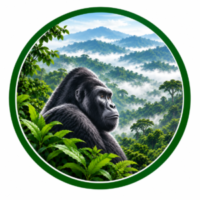
Mgahinga Gorilla National Park, Uganda: Home of Mountain Gorillas
Mgahinga Gorilla National Park is one of Uganda’s most remarkable wildlife destinations, offering visitors the opportunity to trek endangered mountain gorillas, encounter rare golden monkeys, hike spectacular volcanic mountains and learn about the cultural heritage of the Batwa people. Located in the southwestern corner of Uganda, the park combines extraordinary wildlife with dramatic scenery and rich cultural experiences.
Covering approximately 33.7 square kilometres, Mgahinga is Uganda’s smallest national park, but its ecological importance extends far beyond its size. It protects the Ugandan slopes of three magnificent Virunga volcanoes and forms part of a wider transboundary landscape shared with Rwanda and the Democratic Republic of Congo.
For travellers seeking an alternative to the more widely known gorilla trekking experience in Bwindi Impenetrable National Park, Mgahinga offers a distinctive combination of mountain gorilla encounters, bamboo forests, volcanic hiking and cultural tourism. Its quieter atmosphere and striking mountain scenery make it an especially rewarding destination for nature lovers and adventure travellers.
Where Is Mgahinga Gorilla National Park Located?
Mgahinga Gorilla National Park is situated in Kisoro District in southwestern Uganda, close to the borders with Rwanda and the Democratic Republic of Congo. It lies within the Virunga mountain region, a chain of volcanic mountains that stretches across the three countries.
The nearest major town is Kisoro, which serves as an important base for visitors travelling to the park. The main visitor facilities are located around Ntebeko, the principal park access area for several tourism activities.
Mgahinga is approximately 510 kilometres by road from Kampala, although the journey distance and travel time depend on the route, traffic and road conditions. The drive passes through Uganda’s southwestern highlands, with scenic views of rolling hills, terraced farmland and mountain landscapes.
The park forms part of the wider Virunga Conservation Area alongside Volcanoes National Park in Rwanda and Virunga National Park in the Democratic Republic of Congo. Together, these neighbouring protected areas help conserve the habitats and wildlife of the Virunga region, including mountain gorillas that move across international boundaries.
Mountain Gorillas in Mgahinga Gorilla National Park
Mountain gorillas are the park’s most celebrated attraction. These endangered great apes inhabit the forested slopes of the Virunga Mountains, where they feed on vegetation, rest, socialise and raise their young within closely bonded family groups.
Mgahinga protects habitat used by mountain gorillas moving within the wider Virunga landscape. Its best-known habituated group is the Nyakagezi Gorilla Family, which has traditionally been the main group available for gorilla trekking in the park. Because gorillas can move across national boundaries, their location and trekking arrangements should be confirmed before travel.
The opportunity to observe mountain gorillas in their natural environment is one of the most memorable wildlife experiences available in Uganda. Visitors may see adults feeding on leaves, juveniles playing among vegetation and family members resting or interacting. Sightings and viewing conditions vary because gorillas are wild animals moving freely through their habitat.
Travellers can discover the history and trekking background of the Nyakagezi Gorilla Family, whose movements and family dynamics are an important part of Mgahinga’s gorilla tourism story.
What Is Gorilla Trekking Like in Mgahinga?
Gorilla trekking begins with registration and a briefing from park staff before visitors enter the forest with authorised guides and trackers. The team works to locate the gorillas, and the length of the hike depends on where the family is found that day.
The terrain can be steep, uneven and muddy, with sections of dense vegetation and changing weather. Some treks are relatively manageable, while others require considerable stamina. A reasonable level of fitness, sturdy hiking boots, drinking water and rain protection can help make the experience more comfortable.
When the gorillas are located, visitors are allowed a strictly controlled period to observe them under the applicable wildlife-viewing rules. Guides explain how to behave around the animals, helping protect both the gorillas and the people visiting them.
Gorilla trekking permits are limited and should be arranged in advance through the Uganda Wildlife Authority or a reputable tour operator. Availability, current fees, age requirements and trekking arrangements should be verified for the intended travel date.
Golden Monkey Tracking in Mgahinga
Mountain gorillas are not the only remarkable primates found in Mgahinga Gorilla National Park. The park is also an important habitat for the endangered golden monkey, a striking primate recognised by its golden-orange colouring against darker fur.
Golden monkeys live in the bamboo forests of the Virunga region, where bamboo shoots form an important part of their diet. Their energetic behaviour and tendency to move actively through the vegetation make tracking them a different experience from gorilla trekking.
During a golden monkey tracking excursion, visitors enter the forest with guides to locate the monkeys and observe their behaviour. They may see the animals feeding, jumping between bamboo stems or moving through the undergrowth in search of food.
Golden monkey tracking provides an excellent addition to a gorilla trekking safari, particularly for travellers interested in primates and forest ecology. The activity also highlights the importance of protecting bamboo habitats, which support wildlife that depends on this distinctive vegetation zone.
The Virunga Volcanoes and Hiking Adventures
One of Mgahinga’s most striking features is its dramatic volcanic landscape. The park protects the Ugandan slopes of three inactive volcanoes: Mount Muhabura, Mount Gahinga and Mount Sabyinyo. Their steep slopes, changing vegetation and high-altitude scenery create outstanding opportunities for hiking and nature photography.
Mount Muhabura
Mount Muhabura rises to approximately 4,127 metres above sea level, making it the highest of the three volcanoes associated with Mgahinga. Its name is commonly interpreted as “the guide,” reflecting its prominent appearance in the surrounding landscape.
The mountain is a challenging hiking destination for visitors seeking a demanding high-altitude adventure. As hikers ascend, the vegetation and weather conditions change, and the views across the Virunga region can be spectacular when visibility is clear.
Because of the elevation and physical demands, climbing Mount Muhabura requires preparation, suitable clothing and guidance from authorised park personnel.
Mount Gahinga
Mount Gahinga reaches approximately 3,474 metres above sea level and gives the national park its name. The name “Gahinga” refers to small piles of volcanic stones cleared from farmland in the surrounding area.
Compared with the higher neighbouring peaks, Mount Gahinga offers a different perspective on the volcanic landscape and its vegetation. Hiking routes pass through montane forest and bamboo zones, providing opportunities to appreciate the relationship between altitude, plant communities and wildlife habitat.
The mountain is an attractive option for visitors interested in combining physical activity with an exploration of the park’s natural environment.
Mount Sabyinyo
Mount Sabyinyo rises to approximately 3,645 metres and is recognised by its rugged, jagged summit. Its name is often associated with the appearance of an old person’s teeth.
The Sabyinyo hike is particularly well known for its ridge-top views and the international boundaries that meet in the mountain region. Depending on the authorised route and conditions, hikers can experience remarkable views towards Uganda, Rwanda and the Democratic Republic of Congo.
The ascent is demanding in places and may involve steep sections, ladders or exposed terrain along the established route. Visitors should follow the instructions of park guides and prepare for rapidly changing mountain weather.
Volcano hiking offers a different experience from gorilla trekking: rather than focusing on a particular wildlife encounter, it allows travellers to explore the high-altitude scenery, vegetation zones and geological character of the Virunga Mountains.
Forests, Vegetation and Wildlife
Despite its small size, Mgahinga contains several vegetation zones shaped by elevation, temperature and rainfall. These include montane forest, bamboo forest, woodland and higher-altitude vegetation associated with the volcanic slopes.
The bamboo zone is especially important because it provides habitat for golden monkeys and forms part of the broader ecosystem used by other forest wildlife. At higher elevations, plant communities change with the cooler conditions, creating a distinctive landscape that differs from Uganda’s lowland forests and savannahs.
Other mammals recorded in the park include forest elephants, buffaloes, bushbucks and giant forest hogs. Leopards are also associated with the wider habitat, although large mammals can be difficult to see in dense vegetation. Wildlife sightings are never guaranteed, and the park’s appeal extends beyond the animals visitors may encounter directly.
Mgahinga is also a rewarding destination for birdwatching. Its montane habitats support a variety of forest and highland bird species, including birds associated with the Albertine Rift region. Birdwatchers can look for different species along forest edges, bamboo stands and mountain trails, ideally with a knowledgeable local guide.
The diversity of habitats within Mgahinga demonstrates why the park is valuable not only for mountain gorillas but also for the many species that depend on the Virunga ecosystem.
The Batwa People and Their Cultural Heritage
Mgahinga’s significance extends beyond its wildlife and scenery. The forest is closely connected to the history and cultural heritage of the Batwa people, who traditionally lived as forest hunter-gatherers before the area was established as a national park.
The creation of protected areas changed the relationship between the Batwa and their ancestral forest. Cultural tourism initiatives now provide opportunities for visitors to learn about aspects of Batwa history, traditional knowledge and forest-based ways of life, while supporting participating community members.
The Batwa Trail Experience introduces visitors to cultural interpretations of the forest, including traditional uses of plants, historical hunting practices and the spiritual significance of the natural environment. Batwa guides and community members share their knowledge and experiences, offering perspectives that complement the park’s wildlife attractions.
A respectful cultural visit recognises the Batwa as living communities with their own histories and contemporary experiences, rather than treating their heritage simply as a tourist attraction. Choosing a responsible, community-led experience can help visitors gain a more meaningful understanding of the relationship between people, culture and conservation.
Best Time to Visit Mgahinga Gorilla National Park
Mgahinga can be visited throughout the year, but weather conditions can influence trekking, hiking and road access.
The relatively drier periods, often occurring around June to August and December to February, are popular for outdoor activities. Trails may be less muddy during these months, although rain remains possible in the mountains.
The wetter periods, generally around March to May and September to November, can bring more challenging trail conditions. However, the forest becomes lush, and mist and cloud can add atmosphere to the volcanic scenery.
The best time to visit depends on the main activity. Gorilla trekking and golden monkey tracking can take place in different seasons, while volcano hiking requires particular attention to weather, trail conditions and physical preparation.
Visitors planning a multi-activity safari should allow enough time for trekking, hiking and travel between accommodation and park activity points. Checking conditions and arrangements with the park or tour operator before departure is advisable.
How to Get to Mgahinga Gorilla National Park
Travellers can reach Mgahinga by road or by domestic air travel followed by a transfer to the park.
Travelling by Road from Kampala
The road journey from Kampala usually passes through Kabale and Kisoro before continuing to the park entrance. It offers views of southwestern Uganda’s highlands, cultivated hillsides and rural settlements.
Although the distance is commonly quoted at around 510 kilometres, the journey can take much of the day depending on traffic, road conditions and stops. The final approach from Kisoro to the park can include rough or steep sections, particularly in wet weather, so travellers should plan transport accordingly.
A private safari vehicle with an experienced driver can make the journey more convenient, especially for visitors combining Mgahinga with other destinations in southwestern Uganda.
Travelling by Air
Domestic flights to Kisoro Airstrip can reduce the time spent travelling overland from Entebbe or the Kampala area. A road transfer is still required between the airstrip and the park or accommodation.
Flight schedules, luggage restrictions, operating days and transfer arrangements should be checked when planning the trip, as services may vary by season and operator.
Combining Mgahinga with Bwindi
Mgahinga can be combined with Bwindi Impenetrable National Park in a longer Uganda wildlife itinerary. Both parks offer mountain gorilla trekking, but their landscapes and additional activities differ.
Bwindi is known for its extensive rainforest and several gorilla trekking sectors, while Mgahinga offers the distinctive scenery of the Virunga volcanoes and the opportunity to track golden monkeys. The most suitable itinerary depends on permit availability, accommodation, road conditions and the amount of time available.
Travellers combining the parks should check driving times between their chosen trekking sectors rather than assuming that all parts of Bwindi are close to Mgahinga.
Accommodation Near Mgahinga Gorilla National Park
Accommodation options around Mgahinga and Kisoro range from simple guesthouses and campsites to comfortable lodges and higher-end safari properties. The best choice depends on budget, preferred comfort level, transport arrangements and planned activities.
Staying near the park can be convenient for early-morning trekking briefings and hiking departures. Kisoro town provides additional accommodation and services, while properties in the surrounding countryside may offer views of the Virunga volcanoes and nearby agricultural landscapes.
When choosing accommodation, consider the distance to the relevant park access point, the condition of the access road, meals, transport availability and whether the property can help coordinate activities. Travellers should confirm the location of their gorilla trekking or hiking start point before finalising accommodation, since not every activity necessarily begins at the same place.
Conservation and the Importance of Mgahinga Gorilla National Park
Mgahinga plays an important role in protecting mountain gorillas, golden monkeys and the habitats of the Virunga Mountains. Its forests and vegetation zones support wildlife while helping protect mountain watersheds and maintain ecological processes across the landscape.
The Uganda Wildlife Authority manages the national park and oversees conservation and tourism activities. Rangers, researchers, conservation partners and local communities all contribute to efforts to protect wildlife and reduce threats to the ecosystem.
Challenges include the need to protect wildlife habitat, address human-wildlife interactions and maintain positive relationships between conservation authorities and communities living around the park. Sustainable tourism can contribute to local livelihoods through guiding, accommodation, transport, cultural experiences and other visitor services.
Visitors can support conservation by following park regulations, respecting wildlife-viewing distances, avoiding littering, using authorised guides and choosing responsible tourism providers. These practices help protect the environment while ensuring that local communities can benefit from tourism.
Why Visit Mgahinga Gorilla National Park?
Mgahinga Gorilla National Park offers a distinctive combination of wildlife, adventure, scenery and cultural heritage within a compact protected area. Visitors can trek endangered mountain gorillas, track golden monkeys, hike the Virunga volcanoes, observe montane birds and learn about the Batwa people’s historical relationship with the forest.
Its setting along the borders of Uganda, Rwanda and the Democratic Republic of Congo gives the park wider conservation significance, while its volcanic landscape creates a dramatic backdrop for outdoor activities.
For travellers seeking a mountain gorilla safari with opportunities beyond gorilla trekking, Mgahinga is an exceptional destination. With thoughtful planning, appropriate preparation and respect for wildlife and local communities, a visit offers a deeper appreciation of Uganda’s natural heritage and the importance of protecting one of Africa’s most remarkable mountain ecosystems.